



proceso de revestimiento de aluminio
Cladding of Aluminum and Steel An Overview The cladding of aluminum and steel has become an essential technique in modern construction and manufacturing. This process involves applying a layer of aluminum over steel or vice versa, leading to a composite material that combines the best properties of both metals. This article delves into the significance, methods, applications, and benefits of aluminum and steel cladding. Understanding Cladding Cladding is essentially a protective layer that is applied to the surface of an underlying material. In the case of aluminum and steel, the cladding serves multiple purposes, including enhancing aesthetics, providing additional protection against environmental factors, and improving structural integrity. The combination of these two metals creates a lightweight, durable composite that is ideal for various applications. Types of Cladding Processes There are several methods for cladding aluminum and steel, including 1. Roll Bonding This is a mechanical process where two metals are passed through a set of rollers under high pressure. As they are squeezed together, they form a strong bond, creating a clad metal sheet. 2. Explosion Bonding This method involves using an explosive charge to create a high-velocity impact between aluminum and steel. The resulting pressure bond creates a metallurgically bonded layer that is incredibly strong and resistant to delamination. 3. Lamination In this process, aluminum sheets are bonded to steel substrates using adhesives or heat. This method is often used for producing decorative finishes for various applications. 4. Welding While not the primary method for complete cladding, welding can be used to join aluminum and steel components together, particularly in structural applications. Applications of Aluminum and Steel Cladding The cladding of aluminum and steel finds its applications across several industries cladding of aluminum and steel 1. Construction In building facades, aluminum cladding provides an attractive appearance and weather resistance, while steel offers structural support. This combination enhances the performance of modern buildings, allowing for creative architectural designs. 2. Automotive Cladding materials are used to create lightweight, strong car parts that improve fuel efficiency and safety. The aluminum layer can reduce the weight of the vehicle, while steel ensures strength and durability. 3. Marine In shipbuilding, the cladding of aluminum and steel is critical for producing hulls and other components that need to withstand harsh maritime conditions. The aluminum provides corrosion resistance, while steel gives rigidity and strength. 4. Industrial Equipment Clad materials are often used in heat exchangers and other industrial applications where thermal conductivity and strength are essential. The thermal properties of aluminum combined with the toughness of steel enable efficient and reliable operations. Benefits of Cladding Aluminum and Steel The cladding of these two metals offers numerous advantages 1. Corrosion Resistance Aluminum naturally forms a protective oxide layer, which helps prevent corrosion. When cladded with steel, the overall material becomes more resistant to environmental factors like moisture and chemicals. 2. Lightweight yet Strong The combination allows manufacturers to create products that are significantly lighter than traditional steel, without sacrificing strength. This is particularly beneficial in the aerospace and automotive industries. 3. Aesthetic Appeal Aluminum provides a visually appealing finish that can be painted or anodized to achieve various colors and textures. This is ideal for building facades, furniture, and consumer products. 4. Improved Thermal and Electrical Conductivity In applications requiring heat transfer, the aluminum component of cladded materials enhances heat dissipation, making them desirable in systems like heat exchangers. Conclusion The cladding of aluminum and steel represents a fusion of two metals that can dramatically enhance performance across various applications. As industry demands evolve, the techniques and materials used for cladding will continue to advance, offering even greater benefits. The versatility, strength, and aesthetic possibilities afforded by this composite material make it a critical component in the future of construction, manufacturing, and design. Embracing these innovations will ensure that we build better and more efficient products for a sustainable future.

We have successfully executed over 500
projects around the world,
many first-of-their-kind
research projects and products in China, including
We have successfully executed over 500
projects around the world,
many first-of-their-kind
research projects and products in China, including
-
2004
The 1st hydraulic AGC system for hot rolling of ribbon steel
-
2006
The 1st AFC system used for 1450mm skin pass mill
-
2009
The 1st 5-stand tandem line with 2-stand POR & Uncoiler for 650mm ribbon steel
-
2012
The 1st reversing mill for 1380mm strip
-
2016
The 1st soft-rolling system used in skin pass mill
-
2019
The 1st fully automated medium-width tandem cold rolling mill
-
2021
The 1st 5000KN Twin-stand double skin pass mill
-
2022
The 1st coupled pickling line & tandem cold mill with two modes - big roller & small roller
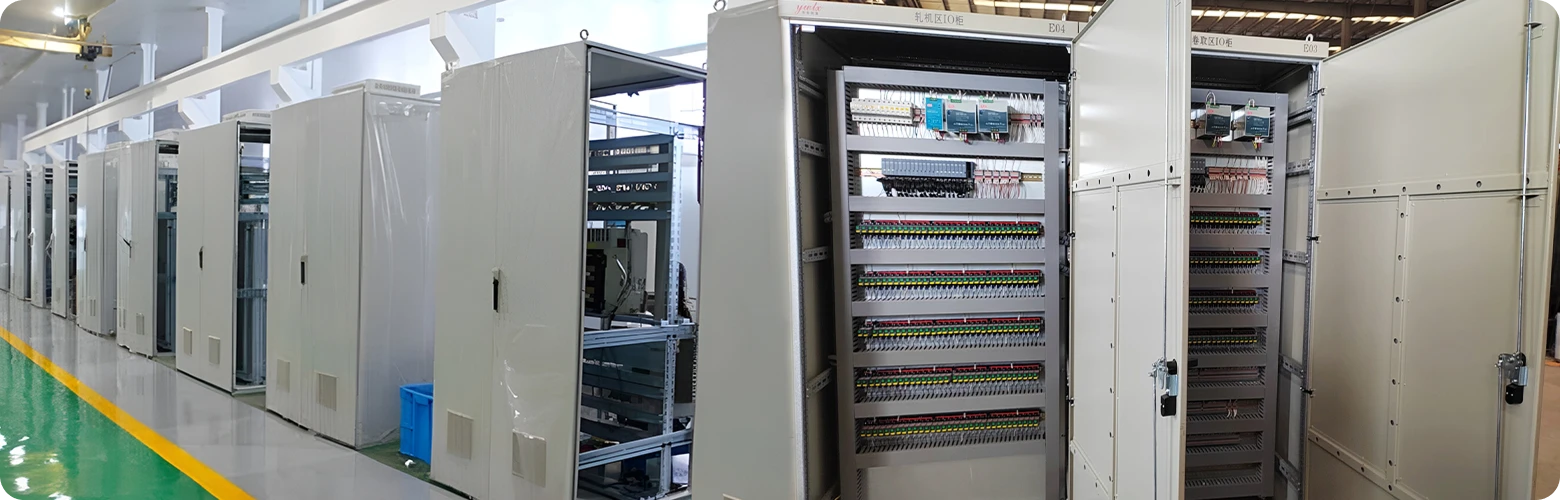
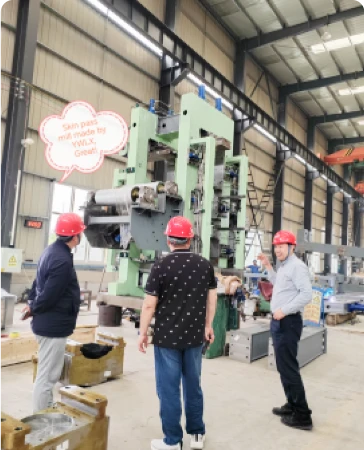

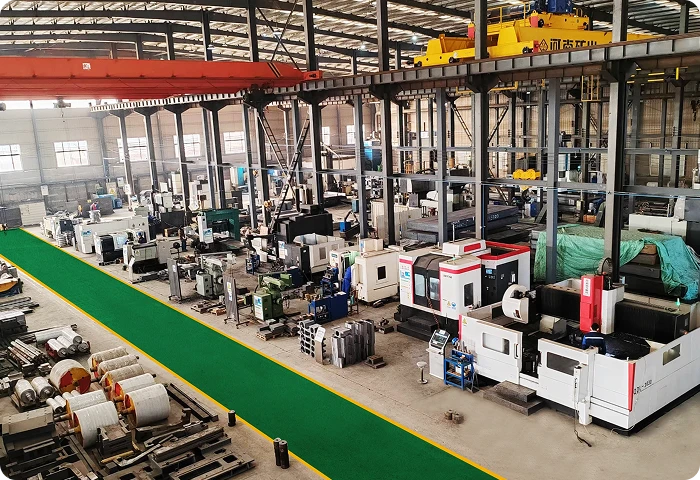
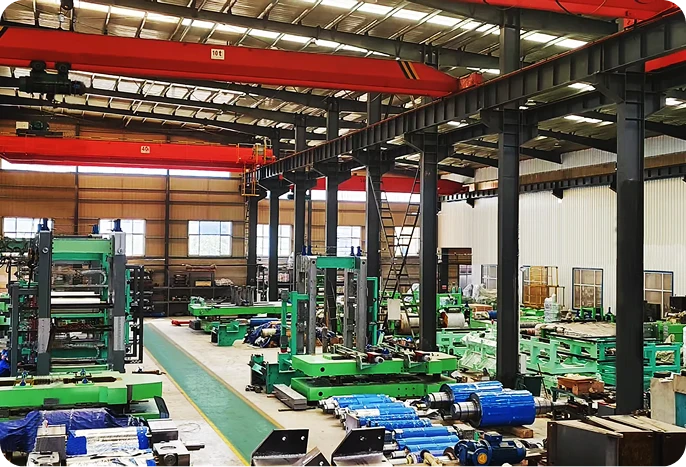
Yang Wang Li Xin operates a state-of-the-art facility over 66,000 square meters,and our manufacturing facility is fully equipped with high-tech machinery and high-capacity cranes. This enables us to handle large work pieces measuring 4.5m in width, 10m in length, and 1.5m in height, guaranteeing our capacity to produce 1800mm skin-pass mills and 1450mm rolling mills. The individual piece can weigh up to 100 tons.


Quality is fundamental to the enterprise survival. We have established a comprehensive and meticulous quality management system and have successfully obtained ISO14000 certification. Starting from the design source, it supervises the entire production cycle, including design, procurement, processing, assembly, in-factory testing, installation, and online commissioning. The workshop is equipped with measuring tools like vernier calipers, spectrometers, hardness testers, and ultrasonic flaw detectors. They are used to check materials and control tolerances to ensure the final equipment meets or exceeds requirements. All products have a unique code, This enables the easy identification and traceability of the equipment components and ensures full control of quality.


-
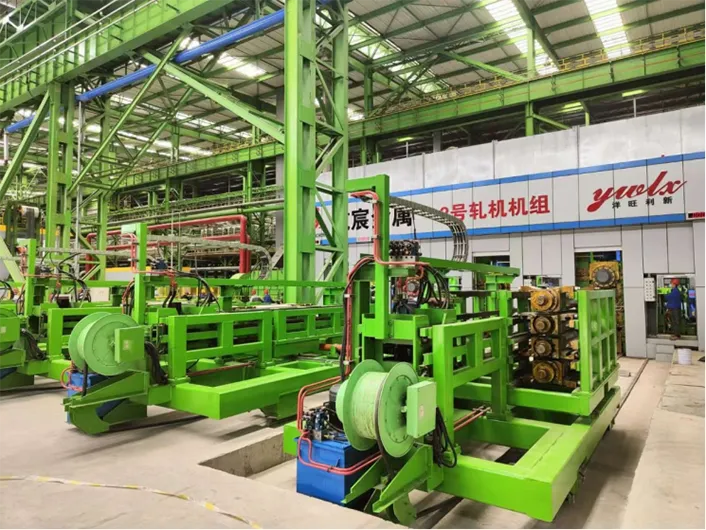 Precision Automatic Gauge Control for Cold Rolling MillsAutomatic gauge control cold rolling mill, automatic gauge control in strip rolling, hydraulic automatic gauge control is a key solution in the manufacturing industry, specifically within Manufacturing of industrial automation equipment and Manufacturing of automation control systems for metallurgical industry. This article explores how Beijing Yang Wang Li Xin Sci&Tech Co.,Ltd. supports professi
 -
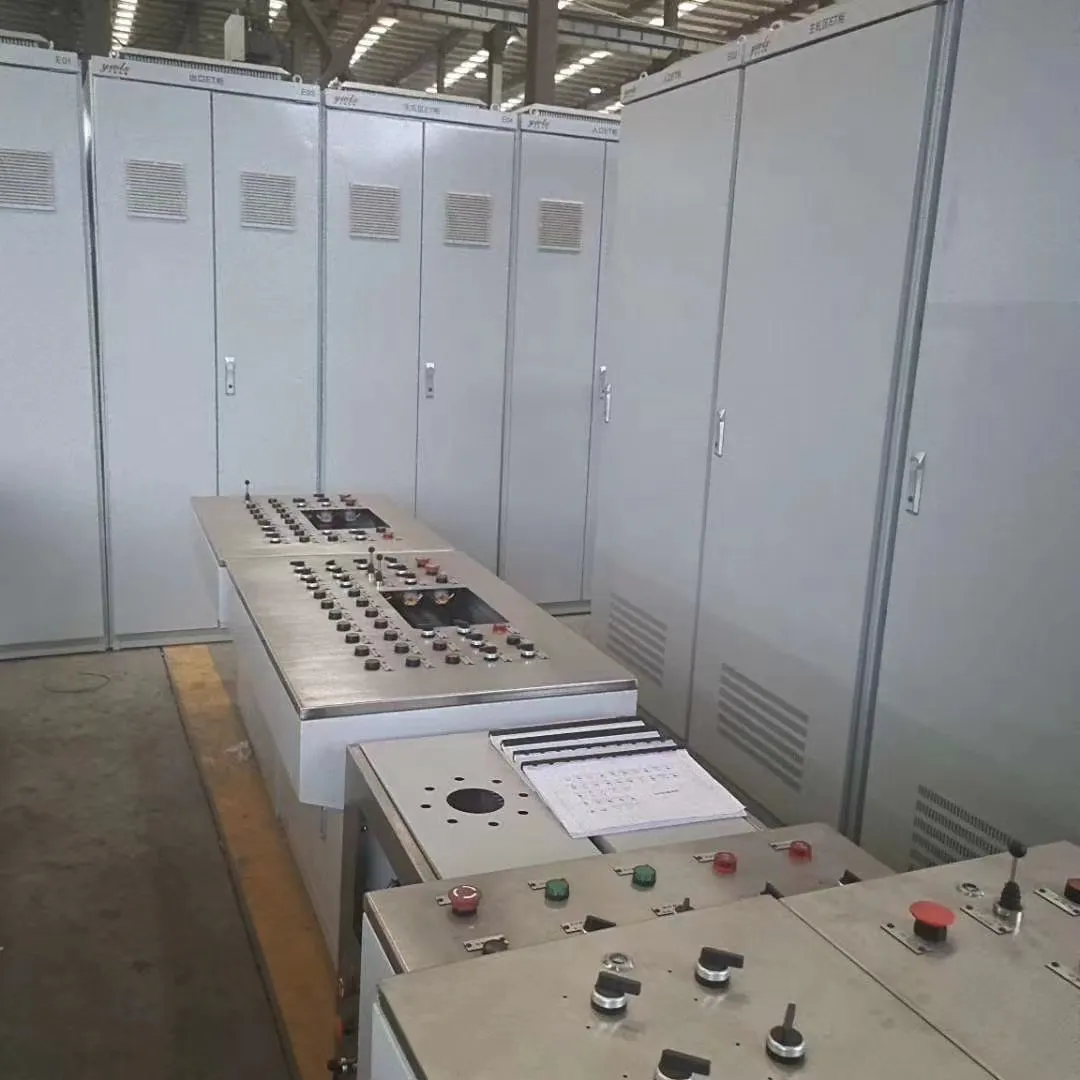 Emerging Applications of Skin Pass Rolling in EV Battery Shell Steel ProductionThe electric vehicle revolution has created unprecedented demand for high-performance battery shell steel, where skin pass rolling technology plays a pivotal role in meeting stringent quality requirements. As automakers seek lighter yet stronger battery enclosures, steel producers are adapting traditional hot skin pass mill operations to serve this emerging market. The precise surface treatment an
 -
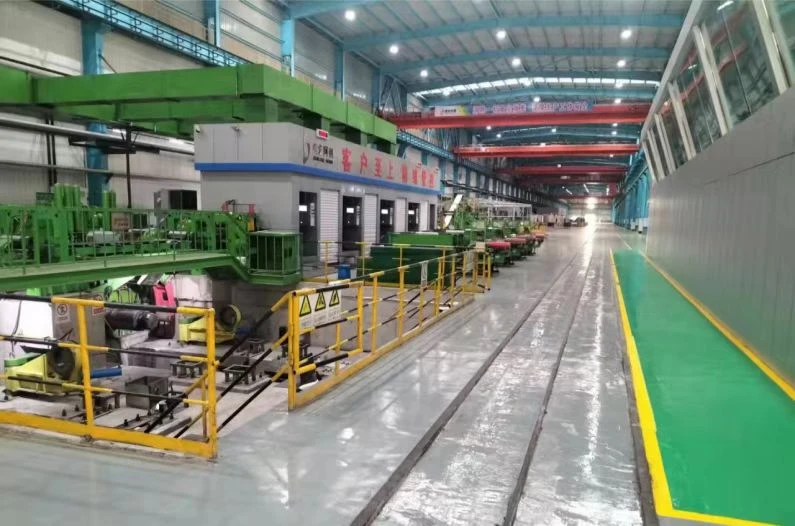 четырехвалковый прокатный станUnraveling the Precision and Efficiency of the Four-High Rolling Mill In the realm of metallurgy and material processing, the four-high rolling mill stands as a paragon of engineering excellence, championing advancements that enable precision, quality, and cost-effectiveness. Known for its capability to exert higher reductions and produce uniform thickness in metal sheets, the four-high rolling mi


